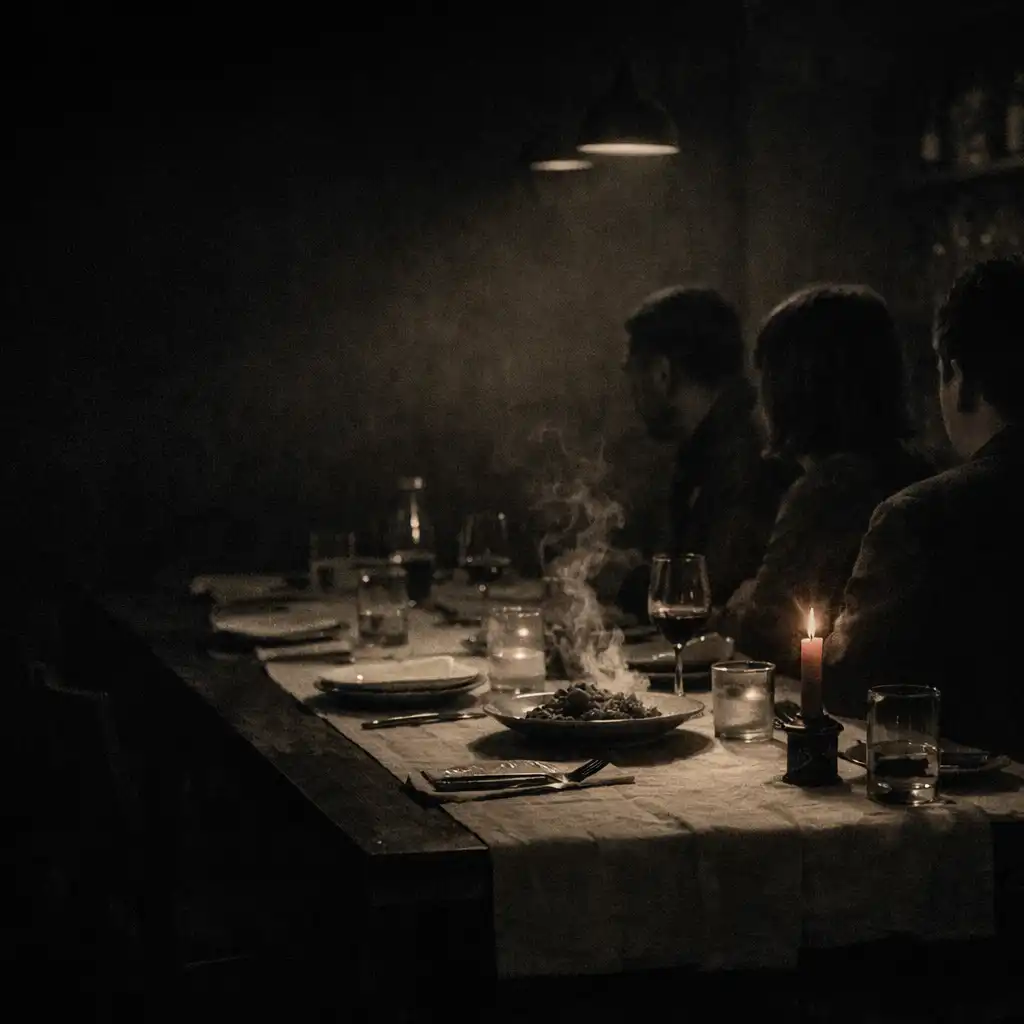
A linen-dressed long table in a shadowed private dining room
Case file 04 / private room

After the last
course

Ember & Linen gathers people around blackened timber, pale linen and considered courses, then lets the room grow quieter as the evening settles. A private dinner may remain at the table, or move naturally toward a hosted card-lounge moment: an in-person ritual of conversation, cards and attentive company. Nothing needs to be announced loudly. The occasion is carried by the people present, the pace they prefer and the physical warmth of the room.

Contact the room

Long table / low light / the room after service

Long table / low light / the room after service

Room study 01

One room, with enough space for dinner to lead and conversation to stay.

A room with two tempos

01

Begin at the table

The first tempo belongs to the meal. Linen catches the low light, plated dishes arrive with care, and conversation finds its own shape across the table. Fine dining is the anchor here: a shared, physical occasion with time to notice the timber, the porcelain and the people gathered close. The room follows the guests’ pace rather than insisting on a prescribed sequence.
02

Let the room turn

After dining, the change can be almost imperceptible. Seats draw closer, light settles differently and attention narrows without dividing the night in two. The card lounge is an offline poker atmosphere held in the same room, with the same composed conversation around it. It is an in-person table ritual, not a departure from hospitality or the people who made the dinner matter.

03

Stay with the table

A hosted Texas Hold’em table is one possible late-night format for guests who want to remain together. Poker tables are simply part of the furniture of the evening: cards in hand, a felt surface under the lamp, and perhaps chips resting quietly as table details. The emphasis stays on etiquette, attention and the people in the room, never on spectacle beyond it.

Formats / held lightly

Ways a gathering can take shape

These are starting points for a conversation with the room, not fixed packages. An early outline of the occasion and the feeling you hope to create is enough to begin.

A refined plated course on ceramic beside folded linen
Record 01 / dining

The long-table dinner

A long-table dinner begins with people arriving into a room that is already prepared for presence. The table becomes the social anchor: courses, linen, small pauses and the ease of staying seated while conversation opens out. It suits a gathering centred on eating well and lingering with intention. When you enquire, describe the tone you would like the room to carry rather than trying to choose from a predetermined arrangement.

Record 02 / transition

Dinner into the card lounge

For a gathering that wants a second tempo, dinner can ease into the card lounge without breaking the atmosphere of the room. Offline poker remains a close, in-person table ritual: chairs gathered in, cards handled with care and conversation still audible around the table. The card lounge is not separate theatre; it is another way to stay with the people present after the meal, in a setting that remains quiet and considered.

Hands arranging playing cards beside linen on a dark poker table
A close view of cards and hands at a dimly lit table
Record 03 / late night

A late-night table ritual

A Texas Hold’em-led hosted evening can give the later hours a gentle focus without changing the room’s character. Poker evenings remain part of the wider hospitality: a prepared table, calm pacing, cards and the shared awareness that everyone is there together. It is a format for guests who value table etiquette and conversation over noise. For further context on the room’s approach, the etiquette guidance offers a useful next read.

Read the room etiquette
Planning note

What a considered enquiry can hold

A useful first message does not need every answer. A little context helps the conversation begin around the occasion, the people and the rhythm you imagine for the room.

01

The occasion

Share the reason for gathering and the mood you hope the room will carry. It might be an intimate celebration, a reunion, a team supper or simply an unhurried late-night table. The useful detail is less about a label and more about the tone: close, ceremonial, relaxed or quietly focused.

02

The people around the table

A simple sense of who is coming helps frame the social shape of the gathering. You might describe whether the group already knows one another, whether the meal is the central moment, or whether conversation needs room to unfold. The aim is comfort and connection, not a detailed personal profile.

03

The evening’s rhythm

Let the room know whether you imagine dining only, a card-lounge interlude, or a later hosted poker table ritual. This is a useful direction to discuss, not a fixed promise. Keeping the outline physical and in-person makes it easier to understand how food, seating and shared attention might sit together.

04

The details worth noting

Include dining considerations or atmosphere preferences that may help start the conversation. A few well-chosen notes can make the initial exchange more useful while leaving room for the idea to develop. When the outline is ready, however lightly drawn, you are welcome to begin an enquiry .

Archive index / partial record

Evidence of the room

These notes are observations rather than event reports: small records of linen, light, hands and the pauses that give an Ember & Linen night its shape. They are a selective index, not an exhaustive calendar.

A/01

Service, close to midnight

A plated course holds the light while linen softens the edge of the table. There is a pause between courses that feels useful rather than empty: porcelain, warm timber and low voices remain in view. The archive keeps these details as observations, not reports, of a room that lets dining stay central well into the night.

A/02

The card table, reset

After dinner, poker tables read differently under the lamp. Cards are squared, chairs are drawn in and a few chips sit only as quiet tabletop details at the edge of the felt. Nothing in the frame asks for an outcome. It is simply a record of texture, attention and the physical order of the table before conversation continues.

A/03

A room still in conversation

A hosted poker evening leaves a particular kind of stillness in the room: hands resting near cards, low voices crossing the table and guests remaining close after the meal. The scene is entirely in person, held by the room and the people within it. This archive is only a partial record of that late-night energy, never a complete account.

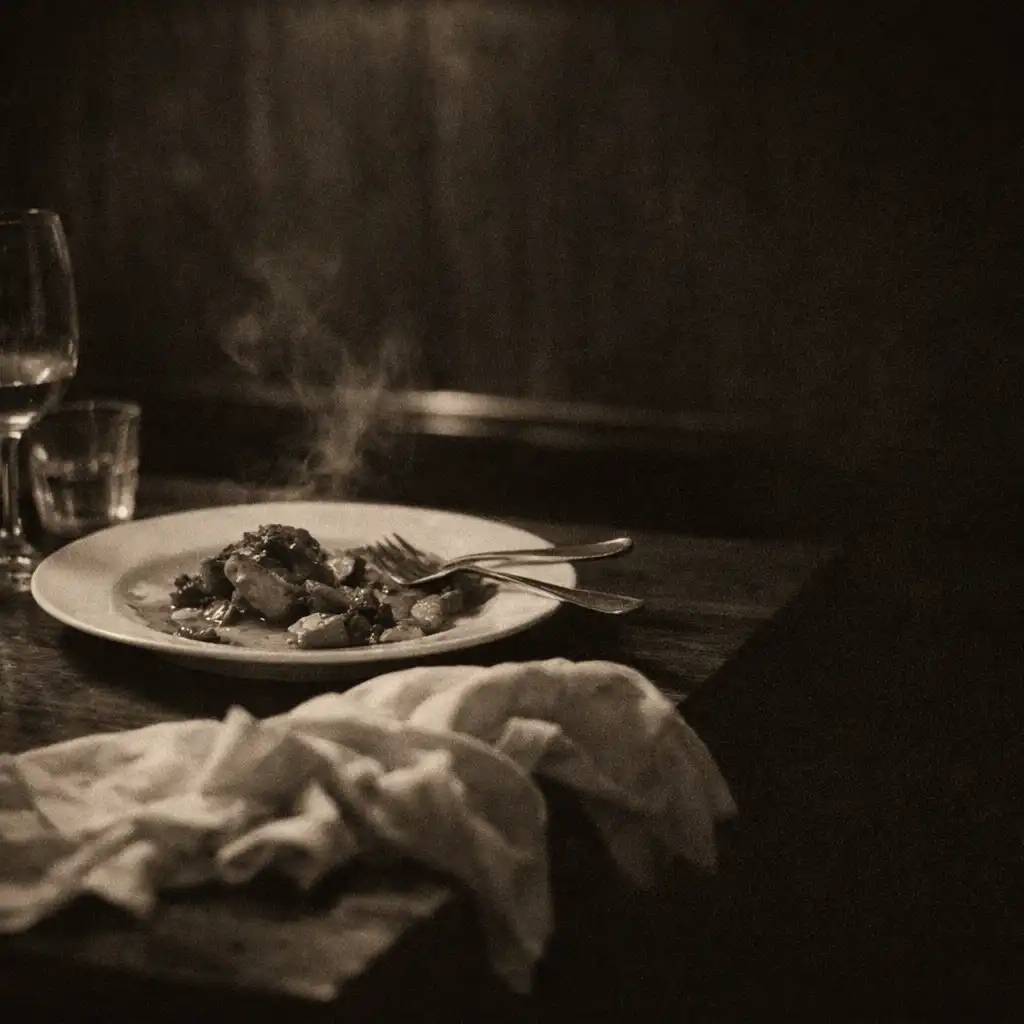
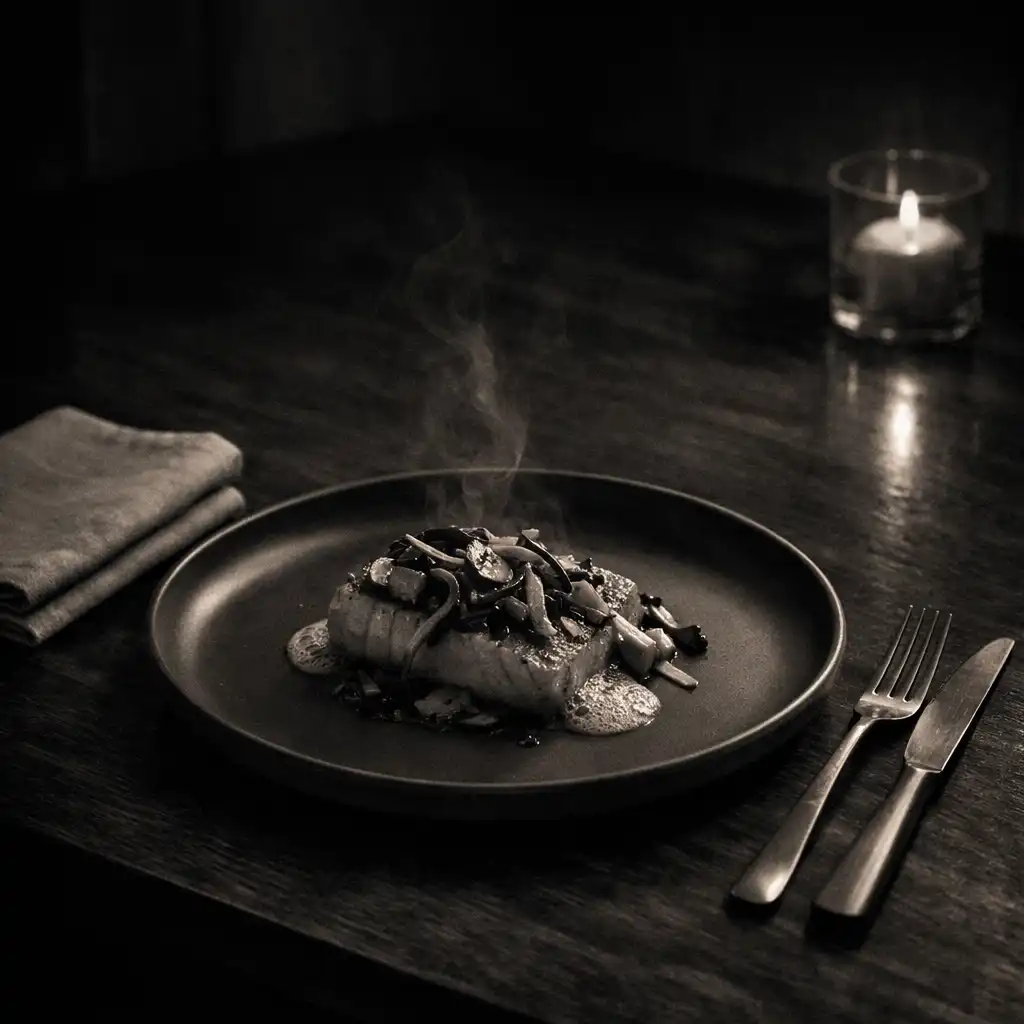
A plated dish, linen and cutlery in low late-night light

A course held in low light

In the first record, the table has not been hurried toward its next moment. Steam catches a soft pool of light above porcelain; linen gathers at the edge of blackened timber; a plate remains part of the conversation rather than an interruption to it. This is where the late-night character of Ember & Linen begins: with food, care and enough quiet for guests to notice what is in front of them. The card-lounge atmosphere may follow, but dining gives the room its first measure and keeps hospitality at the centre.

The night begins with dining, and keeps its attention there.Archive note / N-01
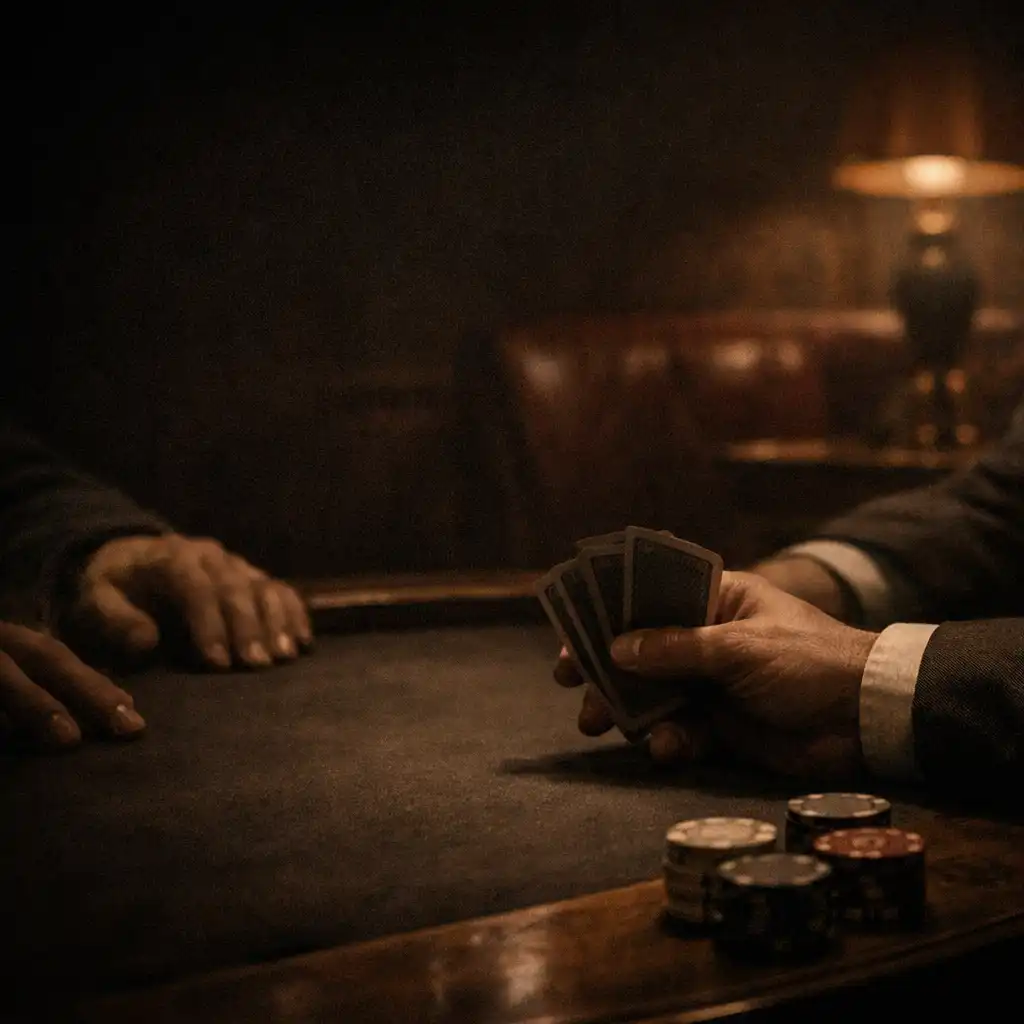
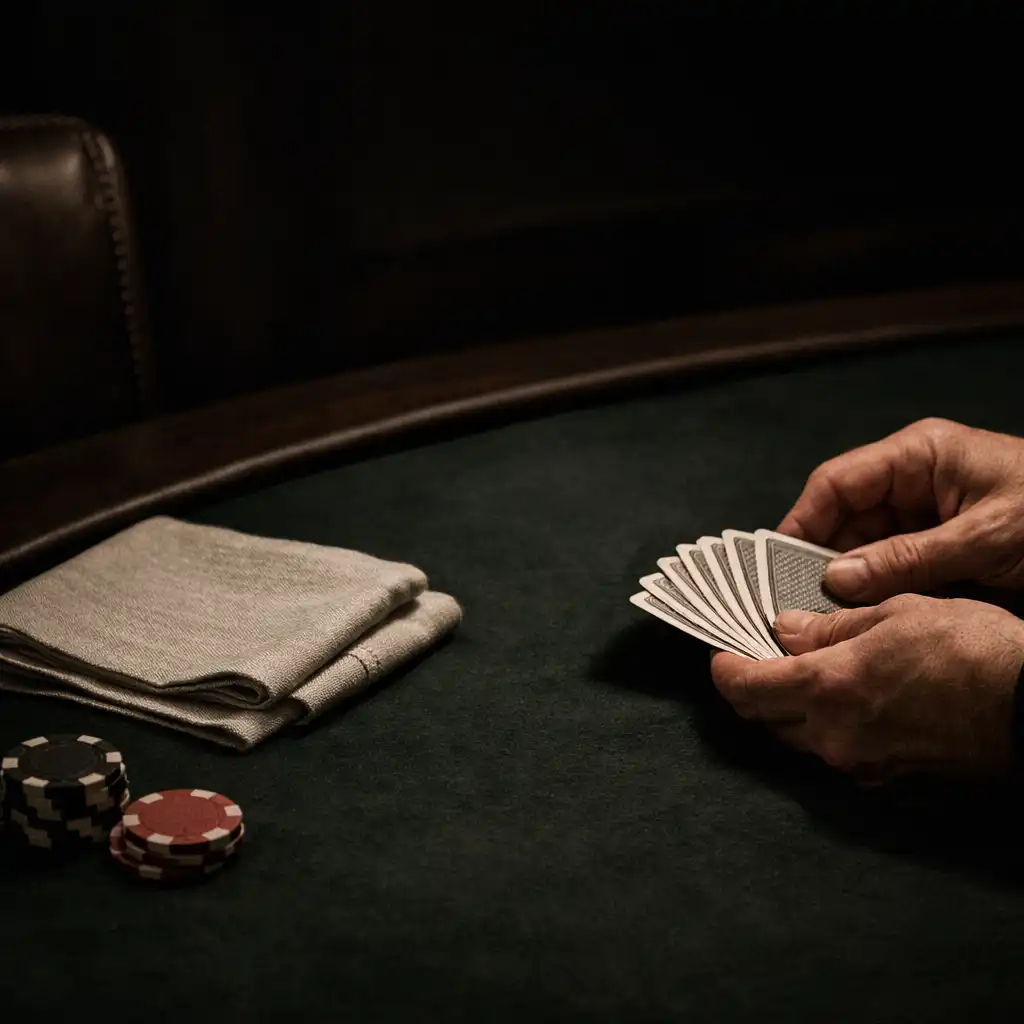
Adult hands holding cards at a dark poker table with chips at the edge
Night record / N-02

Hands, cards, attention

Here, the camera stays close to the table. Hands settle around cards, the felt holds the lamp’s low glow, and an offline poker ritual takes shape without drawing attention away from the people present. The room remains conversational and physical, guided by shared table etiquette rather than display. Faces are not the story; the held attention between guests is.

Texas Hold’em, held with care

Texas Hold’em appears here as a hosted format shaped by calm pacing and a prepared table. Cards are handled with care, chairs stay close and chips rest at the table edge as incidental details. The ritual is part of a composed late-night room, where mutual attention matters more than any gesture beyond the table.

Felt / linen cuff / cards squared after dinner

Room guidance

The room’s quiet rules

A good gathering is protected by the same qualities that make a late-night table memorable: presence, generosity and enough restraint for everyone to stay comfortable.

01

Stay with the people present

Ember & Linen values an offline atmosphere rooted in the physical room. Conversation, a shared meal and small table rituals carry the evening because guests are allowed to give one another their attention. The invitation is simple rather than strict: arrive ready to notice the people around you and let the room keep its unforced calm.

02

Treat the table as shared space

Dining tables, poker tables, cards and service details all belong to one composed setting. General table etiquette helps that setting remain easy to share: make room, handle the objects before you with care and stay aware of the conversation around you. The ritual is at its best when every person can remain comfortably part of the room.

03

Let the evening keep its own pace

There is no need for a poker evening to become a spectacle. Food, conversation and a card-lounge ritual can unfold at a measured pace, with the hosted table remaining part of the room rather than its whole story. For a fuller sense of the approach, read the guidance prepared for guests before you contact the room.

Explore etiquette & FAQ
A private note

Bring the outline, not the answers

An early enquiry can begin with an occasion, a desired feeling and an interest in dinner, the card lounge or both. Ember & Linen can receive the outline while the idea is still taking shape.

Contact Ember & Linen
Location note

Fitzroy, after dark

18 Lantern Lane, Fitzroy VIC 3065, Australia

Ember & Linen is a room for gathering around food, conversation and a late-night table held with care. When the shape of your occasion is ready to share, continue the conversation through the dedicated contact page and let the first note be simple.

Go to Contact Us